Active vs. Passive Investing: Choosing Your Role in Real Estate
When most people think about real estate investing, they picture ownership. But what they don’t always realize is this:
You don’t just choose what to invest in. You choose how you show up.
Early on, I thought investing meant doing everything myself—finding deals, managing properties, solving problems at all hours. And for a season, that was exactly what I needed. But over time, I realized something more important:
Real estate isn’t just about properties. It’s about building a life that works for you.
And that’s where the distinction between active and passive investing really matters.
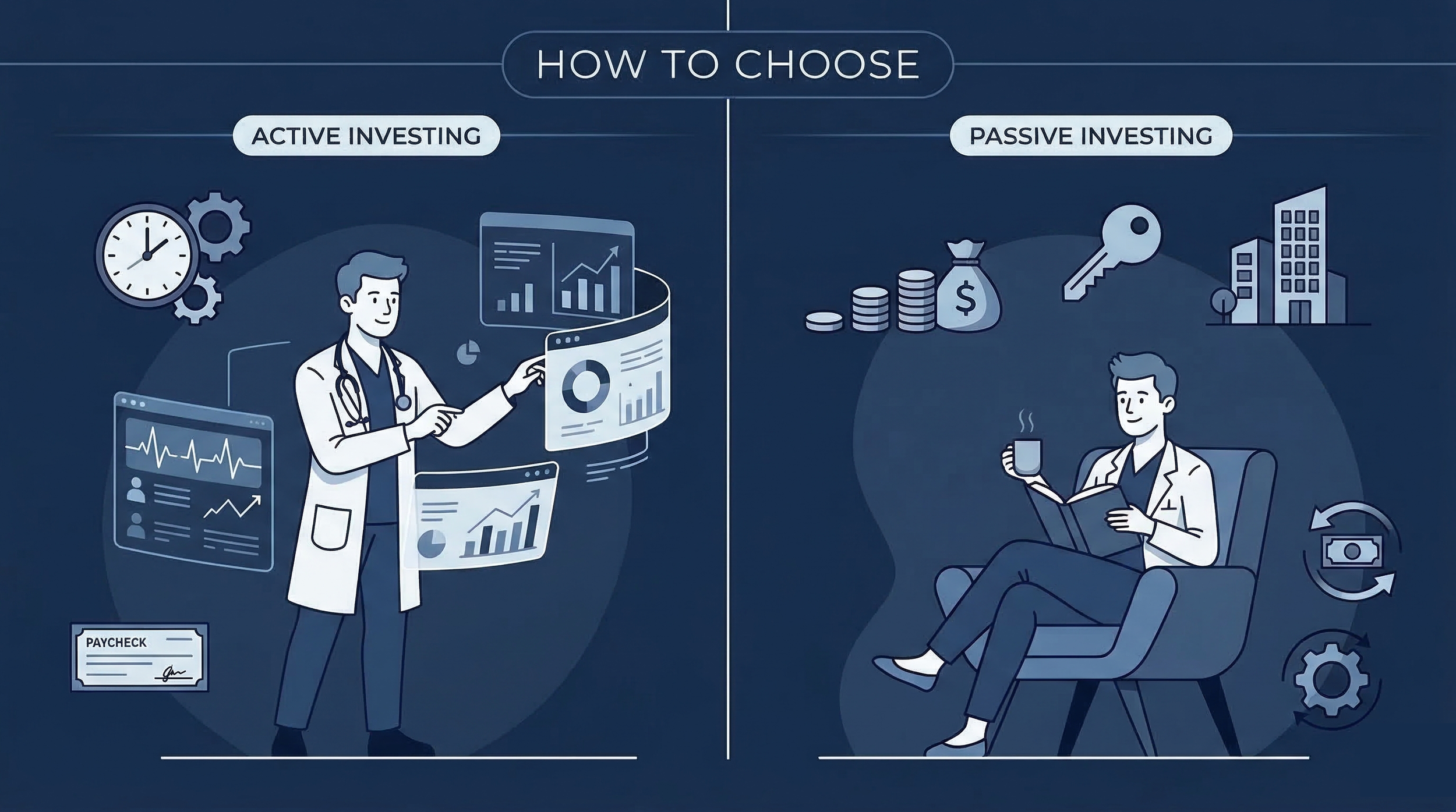
Understanding the Two Paths
At its core, this decision comes down to one question:
Do you want to operate the investment… or participate in it?
Active Investing: Building from the Ground Up
Active investing is exactly what it sounds like—you’re in it, day to day.
You’re the one walking properties, running numbers, coordinating renovations, and making sure the roof gets fixed when it leaks at the worst possible time. I’ve lived this side of the business. It’s where you learn the most—often the hard way.
What Active Investors Really Do
Find opportunities
This means time in the field—talking to brokers, walking neighborhoods, building relationships.Evaluate deals
Not just spreadsheets, but judgment. Understanding what a property could become, not just what it is.Put the deal together
Financing, negotiations, and structuring terms that actually make sense long-term.Operate the asset
Managing tenants, handling issues, and creating a place people are proud to live in.
It’s work. Real work. But it’s also where control lives, and where you develop a deep understanding of the business.
Passive Investing: Letting Your Capital Work
Passive investing is a different role entirely.
You’re not managing the property, you’re partnering with someone who does. Instead of fixing the broken porch, you’re investing in the team that knows how to fix it well. This is where many busy professionals find alignment, especially those who don’t have the time (or desire) to be in the day-to-day.
What Passive Investors Focus On
Choosing the right operator
This is everything. You’re not just investing in a deal—you’re investing in people.Understanding the opportunity
You don’t need to run the property, but you do need to understand how it performs and why it works.Committing capital
Your risk is defined. Your time is protected.
Passive investing doesn’t mean “hands-off and hope for the best.” It means being intentional about where you place trust, and capital.
So… Which One Is Right for You?
This isn’t just a financial decision. It’s a lifestyle decision. A few questions I often come back to:
Where are you in your life right now?
Are you building something new—or protecting what you’ve already built?How do you want to spend your time?
On calls with contractors… or with your family?What kind of risk feels acceptable to you?
Not just on paper—but in real life.Do you want to learn by doing—or by partnering?
There’s no wrong answer here. In fact, many investors eventually do both.
A Final Thought
Some of the most meaningful shifts in my own journey came from realizing this: You don’t have to do everything yourself to build something meaningful.
Active investing taught me how real estate works.
Passive investing taught me how to scale it, and how to give my time a different purpose.
Both matter.
The key is choosing the role that aligns with the life you’re trying to build, not just the returns you’re chasing.
Frequently Asked Questions
What’s the main difference between active and passive investing?
Active investors operate the deal. Passive investors provide capital and rely on a team to execute.
Can you do both?
Absolutely. Many investors start active to learn, then incorporate passive investments to grow and diversify.
Is active investing riskier?
It can be. With more control often comes more responsibility, and more exposure if things don’t go as planned.
If this is something you’ve been thinking about, I’d be glad to talk.
No pressure, just a conversation about where you are and where you want to go.